
WiselyWise transformation case study
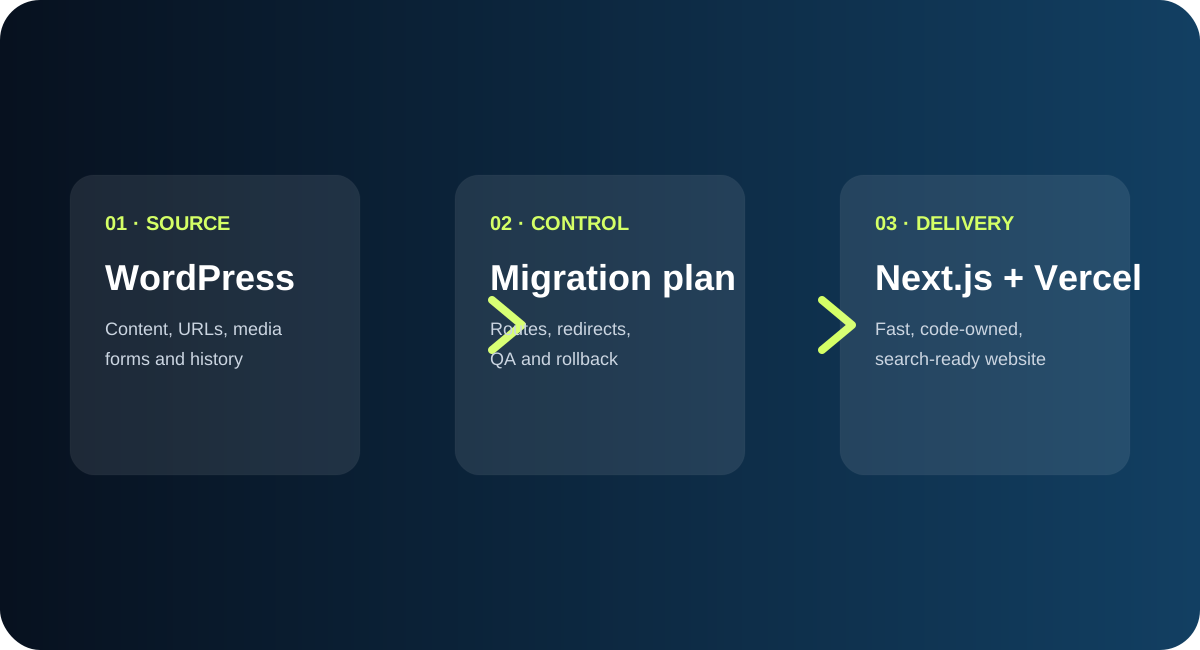
WordPress to Next.js Migration: From Divi to Vercel
How we modernised a live corporate website while protecting the content, search intent, conversion paths and recovery options that the business already depended on.
Production migration
A real site, not a demo
SEO-preserving
Routes, redirects and canonicals
Rollback-ready
Archives and recovery evidence
294
legacy URLs reviewed
70+
readiness checks
10
workstreams
1
route map
Key takeaways
- A platform migration is a content, search and conversion change—not only a code change.
- Every legacy URL needs an explicit keep, consolidate, redirect or retire decision.
- A rollback archive and post-launch observation window belong in the launch plan.
- The public checklist turns these principles into a repeatable review process.
Table of contents
The situation
A familiar website had become difficult to own
The existing site had valuable pages, years of search history, real forms, partner proof and a large media archive. It also carried the cost and constraints of a WordPress, page-builder and managed-hosting stack.
The goal was not to erase that history. It was to give the team a code-owned, static-first foundation that could be reviewed, tested and evolved with less operational friction.
“The framework is only one part of the migration. The real product is the meaning, evidence and path to action that visitors already depend on.”
A migration succeeds when the business journeys survive the technology change.
The risk
A redesign can quietly become an SEO and revenue incident
The playbook
Six decisions made the migration safer
01
Inventory before implementation
Map routes, content families, media, forms, plugins, metadata, analytics and redirect decisions before rebuilding pages.
02
Preserve meaning, not just words
Carry over heading structure, emphasis, lists, images, links, calls to action and the evidence that makes a page credible.
03
Build a native system
Use shared components and structured content where they improve consistency, while keeping page-specific layouts where the source genuinely differs.
04
Test the seams
Validate internal links, canonical URLs, robots, sitemap output, forms, consent, responsive states, accessibility and error paths.
05
Cut over with recovery ready
Keep a verified source archive, a restore-grade code backup and the previous hosting origin available during the observation period.
06
Monitor the business result
Watch availability, crawl errors, search coverage, analytics, contact starts and conversions before retiring the old hosting account.
What changed
The result was more than a framework swap
- A code-owned Next.js site running on Vercel
- A retained URL and redirect strategy
- Production analytics and consent controls
- A working contact and delivery path
- Private WordPress and media recovery archives
- A repeatable review process for future content and pSEO
The lesson
Modernisation is a governance problem as much as a coding problem
The hardest decisions were not about syntax. They were about what deserved to stay, what could be consolidated, which claims were approved, which routes should remain indexable and how to make a future rollback boring.
The same discipline applies to any organisation moving from a page builder to a code-owned platform: make the important decisions visible, test the seams, and give the team a clear path to maintain the result.
Continue learning
Planning a move?
Start with a migration readiness review
We can help you identify what must be preserved, what can be improved and what should not be changed without evidence.
Request a migration review →Frequently asked questions
Why move a working WordPress site?
A working site can still be expensive to maintain, difficult to evolve and constrained by its page-builder model. The decision should be based on business goals, ownership, performance evidence and migration risk—not fashion.
Does a rebuild automatically improve SEO?
No. A new framework only creates an opportunity. SEO is protected by preserving intent, URLs, metadata, links, redirects, canonicals, sitemap behaviour and the content people already find useful.
Should WordPress be switched off immediately?
No. Keep a verified export and recovery archive, retain a rollback path through the observation period, and cancel hosting only after the new site and archives have been checked.
Written by
Chandra Kumar
Founder, WiselyWise · AI, education and business transformation
Chandra writes about practical technology decisions, digital transformation and the operating discipline required to make change useful.
Continue reading
Related articles and resources
How to Move from WordPress to Next.js Without Losing SEO
A guide to preserving content, search intent, forms and analytics.
Read more →WordPress-to-Next.js Migration Readiness Checklist
70+ checks across discovery, SEO, QA, launch and rollback.
Read more →WiselyWise Case Studies
Explore implementation and transformation stories from WiselyWise.
Read more →